
 EN
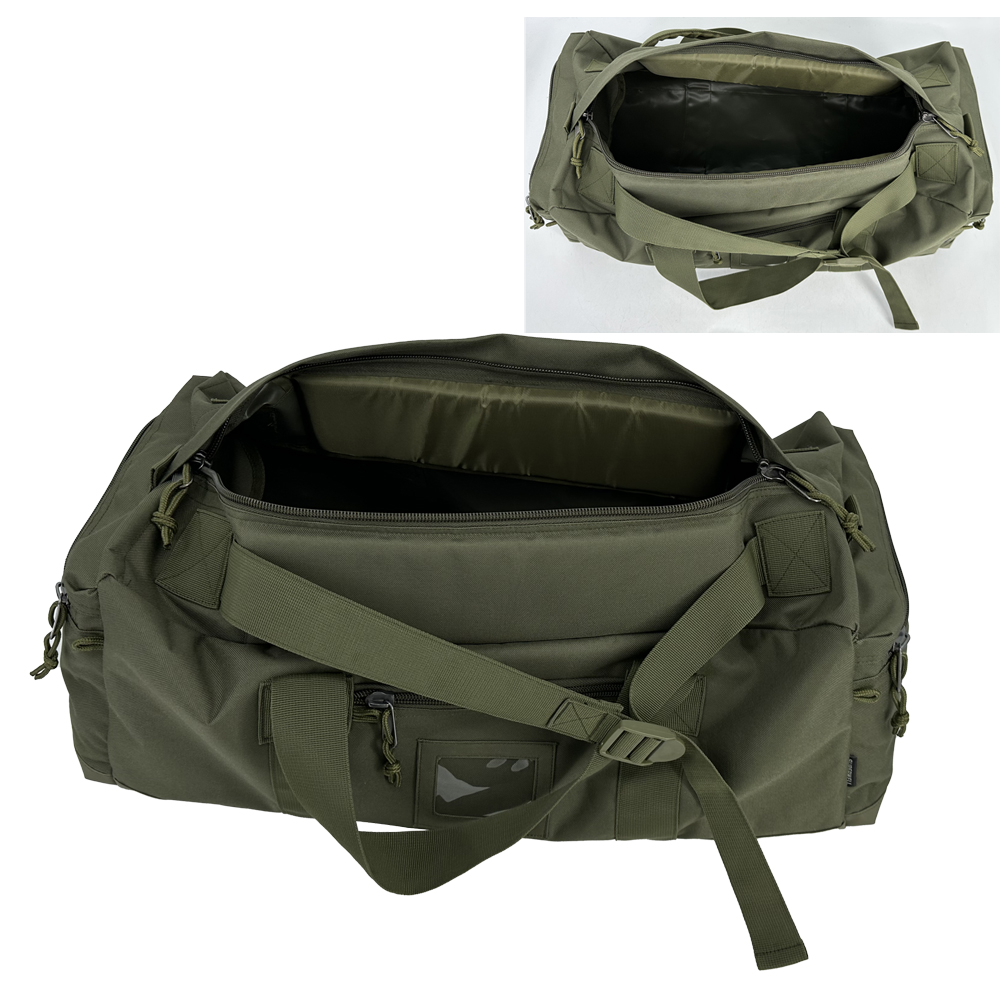
Quilted luggage has rapidly shifted from a seasonal fashion trend into a staple category within travel and lifestyle gear. However, for B2B procurement managers and sourcing directors, ordering quilted duffle bags bulk presents unique technical quality control challenges. Unlike flat-sewn bags, quilted travel gear combines outer shell fabrics, insulating fiberfill wadding, and inner linings under thousands of decorative continuous stitch lines. If stitch tension, thread tensile strength, or needle gauge is miscalculated, bulk shipments face thread popping, insulation migration, and premature seam failure.
Executing a standardized quilting stitch durability test before mass production is the single most effective strategy to safeguard your brand reputation and eliminate defect returns. As a specialized OEM/ODM bag manufacturer with over 20 years of export experience, Superwell implements rigorous lab testing protocols to guarantee every production lot meets international luggage standards. This technical guide breaks down the core testing standards, mechanical parameters, and factory inspection protocols required for quilted duffle bags bulk.
Core Mechanics of a Quilting Stitch Durability Test
A comprehensive quilting stitch durability test evaluates how stitched composite panels withstand mechanical tension, repeated surface abrasion, line loading, and laundering stress. When manufacturing quilted duffle bags bulk, the multi-layer sandwich structure (e.g., 210D Ripstop Nylon + 120g Polyester Wadding + 190T Taffeta Lining) must maintain structural integrity under full packing weight.
Testing standardizes four primary failure modes:
-
Thread Slippage & Grin-Through: Separation of the top thread from the bobbin thread under lateral pull.
-
Needle Hole Elongation: Expansion of needle punctures in PU-coated synthetic shells, compromising water resistance.
-
Thread Abrasion Snap: Friction-induced fiber degradation along prominent geometric quilting patterns (e.g., diamond, channel, or onion quilting).
-
ASTM D1683 Seam Strength Breakdown: Complete tensile rupture of the seam or surrounding fabric fibers under load.
Evaluating these parameters prevents seam failure during high-stress usage scenarios, such as overhead bin stuffing or heavy gym equipment transport.
Key Technical Standards for B2B Quilted Duffle Bag QA
To establish clear quality benchmark acceptance criteria for quilted duffle bags bulk, Superwell aligns factory laboratory procedures with international standards.
Primary Testing Standards Comparison Table
| Testing Standard | Evaluation Metric | Laboratory Method | B2B Acceptance Threshold |
| ASTM D1683 / D5034 | ASTM D1683 Seam Strength & Grab Tensile | Constant Rate of Extension (CRE) Tensile Tester | >= 220 N (Main Body Seams) |
| ISO 13935-2 | Seam Maximum Force to Rupture | Strip Method Tensile Pull | >= 180 N (Internal Quilting Lines) |
| ASTM D3884 / ISO 12947 | Surface Stitch Abrasion Resistance | Taber Abraser (H-18 Wheels, 1000g load) | No thread breakage at 2,000 cycles |
| AATCC 61 / ISO 105-C06 | Stitch Washing & Delamination Resistance | Accelerated Laundering / Dry Clean Cycle | Zero stitch unraveling or fiber displacement |
Applying ASTM D1683 seam strength testing ensures that the quilting thread does not shear or snap when internal packing stress concentrates along intersecting stitch nodes.
Step-by-Step Laboratory Testing Protocol for Bulk Orders
Before authorizing bulk fabric cutting for quilted duffle bags bulk, Superwell subjects pre-production quilted swatches to a multi-stage testing sequence.
Sequence of Lab Validation:
Pre-Conditioning (24hrs @ 21°C/65% RH) -> Tensile Pull (ASTM D1683) -> Cyclic Abrasion -> Pilling & Fiber Leakage Audit
-
Phase 1: Tensile Pull and Load Testing
Using a CRE tensile testing machine, a 100mm quilted panel specimen is clamped securely. The machine applies a constant pull rate of 300 mm/min until either the quilting thread snaps or the shell fabric tears. Standard compliance requires an ASTM D1683 seam strength rating exceeding 200 N for decorative quilting lines and 250 N for structural load-bearing seams.
-
Phase 2: Dynamic Handle and Attachment Jerk Test
Quilted duffle bags often feature webbing handles stitched directly through quilted body panels. To verify stitch durability under realistic conditions, fully weighted duffle samples (15kg to 20kg load) undergo 5,000 continuous drop-impact cycles on a vertical shock tester.
-
Phase 3: Fiber-Proof & Down-Proof Stitch Verification
Aggressive needle piercing during high-speed quilting can puncture synthetic linings, causing inner polyester wadding fibers to migrate outward ("fiber leakage"). Applying ISO 9073-10 testing verifies that thread lock tension prevents fiber penetration through needle holes.
Engineering Parameters That Prevent Quilting Failure
Passing every quilting stitch durability test depends heavily on upstream manufacturing setup. At Superwell , our engineering team optimizes machine parameters before starting production on quilted duffle bags bulk:
-
Thread Selection: We utilize high-tenacity 100% continuous filament polyester thread (Bonded Nylon or Corespun Polyester, Tkt 40/60) with high abrasion resistance and minimal elongation.
-
Stitch Density Control: Stitching density is maintained at precisely 7 to 9 stitches per inch (SPI). Excessively dense stitching (>12 SPI) perforates and weakens the shell fabric, reducing ASTM D1683 seam strength, while loose stitching (<5 SPI) causes snagging and low abrasion endurance.
-
Ballpoint Needle Selection: We use light ballpoint needles (SES/SUK point, size 90/14 to 100/16) that gently displace synthetic fabric yarns rather than cutting through them, preserving fabric tensile strength.
For a broader perspective on factory quality management systems, BSCI/GRS audits, and complete luggage manufacturing processes, visit our comprehensive
B2B Sourcing Strategy for Quilted Duffle Bag Buyers
When negotiating supply contracts for quilted duffle bags bulk, procurement teams can mitigate quality risks by implementing these actionable procurement practices:
-
Request Pre-Production Test Reports: Always demand certified lab test results showing compliance with ASTM D1683 seam strength and Taber abrasion limits prior to approving mass production swatches.
-
Define AQL Inspection Criteria: Incorporate specific stitch inspection criteria into your AQL 2.5 quality control checklist, classifying open quilting stitches, skipped threads, or thread tails over 3mm as Major Defects.
-
Choose Proven OEM Partners: Work with verified bag manufacturers who possess automated multi-needle CNC quilting equipment and in-house laboratory testing facilities.
By embedding a rigorous quilting stitch durability test protocol into your sourcing workflow, your brand ensures that quilted duffle bags bulk deliver long-lasting performance, superior aesthetic appeal, and total customer satisfaction.