
 EN
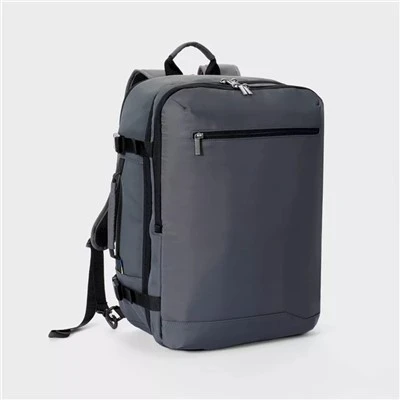
When sourcing and manufacturing high-end puffy tote bags, the resilience, cushioning feel, and structural recovery of the padding material define the product's premium touch. At Superwell, ensuring that materials like high-resilience polyurethane foam, down-alternative polyester wadding, and quilted cotton retain their loft and tactile comfort under pressure requires rigorous mechanical testing. Selecting appropriate compression test methods for puffy tote bag padding material is essential for global brands aiming to prevent flattening, creasing, and premature structural degradation during shipping and daily consumer use.
Why Standard Compression Testing Matters for Puffy Tote Bags
Puffy tote bags rely on internal padding to create their signature cloud-like, voluminous silhouette. However, consumers frequently overpack bags, store them under heavy items, or compress them during travel. Without precise laboratory testing, padding materials can lose their recovery ability, resulting in a deflated, cheap appearance.
Implementing standardized testing protocols allows quality assurance engineers at Superwell to measure how padding behaves under sustained and cyclic loads. By evaluating parameters such as hardness, thickness loss, and percent recovery, our supply chain ensures that every custom puffy tote bag maintains its luxurious aesthetic and ergonomic hand-feel over years of active use.
Core Compression Test Methods for Bag Padding Materials
To evaluate puffy tote bag padding material thoroughly, manufacturers rely on specific mechanical and tactile testing standards adapted from textile and foam industries. Below are the primary methods utilized during our pre-production material audits.
1. Indentation Force Deflection (IFD) and Indentation Load Deflection (ILD)
Derived from standards like ASTM D3574, IFD measures the force required to compress a foam or padded composite sample by a specific percentage, typically 25 percent and 65 percent of its original thickness.
-
Application: Ideal for high-density foam sheets used in structured puffy totes.
-
Testing Procedure: A circular indentor foot presses into the padding specimen at a controlled rate, recording the load resistance. This helps Superwell engineers calibrate the exact softness-to-support ratio required for handles and body panels.
2. Constant Load Compression Creep Test
Puffy tote bags often experience prolonged storage pressure in retail warehouses or transit containers. The creep test evaluates how padding material deforms when subjected to a static weight over an extended timeframe, ranging from 24 to 72 hours.
-
Application: Essential for down-alternative microfiber wadding and loose-fill polyester sheets.
-
Testing Procedure: A standardized weight equivalent to a packed bag, between 5kg to 10kg, is placed on the padding sample. Upon removal of the weight, recovery time and permanent deformation percentages are measured.
3. Cyclic Compression (Fatigue) Testing
To simulate everyday wear and tear, such as continuous squeezing, folding, and arm pressure, cyclic compression testing subjects the padding material to thousands of repetitive loading cycles.
-
Application: Used for all soft padding layers to predict long-term loft retention.
-
Testing Procedure: Pneumatic or hydraulic testers compress the material to 50 percent of its thickness for 1,000 to 5,000 cycles. Post-test thickness loss must not exceed strict internal quality thresholds, typically less than 8 percent loss for premium tier items.
Comparison of Padding Materials and Compression Behaviors
Different padding compositions respond uniquely to mechanical stress. The table below outlines how various materials utilized in custom puffy tote bag manufacturing perform across key compression metrics.
| Padding Material | Density Range | Primary Compression Test Method | Recovery Speed | Best Use Case in Puffy Totes |
|
High-Density PU Foam |
35 to 50 kg/m3 |
ASTM D3574 (IFD) |
Instant (< 2 sec) |
Structured handles and base panels |
|
Down-Alternative Microfiber |
120 to 200 gsm |
Constant Load Creep Test |
Moderate (5-10 sec) |
Ultra-soft, pillowy body panels |
|
Bonded Polyester Wadding |
100 to 300 gsm |
Cyclic Compression Test |
Fast (< 3 sec) |
Lightweight, daily-use quilted totes |
|
Expanded Polyethylene |
30 to 45 kg/m3 |
Compressive Strength Test |
Rigid / Non-recovering |
Protective laptop compartments |
Superwell Factory Quality Control and Inspection Standards
At Superwell, laboratory testing is tightly integrated into our end-to-end manufacturing workflow. Before bulk cutting begins, every roll of padding material undergoes rigorous lot-level incoming quality control.
-
Environmental Conditioning: Samples are conditioned at standard atmospheric conditions of 23 degrees Celsius plus or minus 2 degrees Celsius, and 50 percent plus or minus 5 percent relative humidity for 24 hours prior to compression testing to eliminate humidity biases.
-
Batch Sampling: For every 1,000 meters of padding material, at least 3 random samples are pulled for thickness, density, and compression recovery verification.
-
Traceability: Test reports are archived digitally, allowing OEM and ODM brand partners to verify compliance with international safety and durability standards before final bulk shipment.
Conclusion: Partnering with Superwell for Durable Puffy Totes
Understanding and applying rigorous compression test methods for puffy tote bag padding material ensures that your brand delivers exceptional product longevity and customer satisfaction. By combining advanced mechanical testing, strict factory quality control, and premium material selection, Superwell helps global brands transform creative puffy bag concepts into durable, market-leading retail products.