
 EN
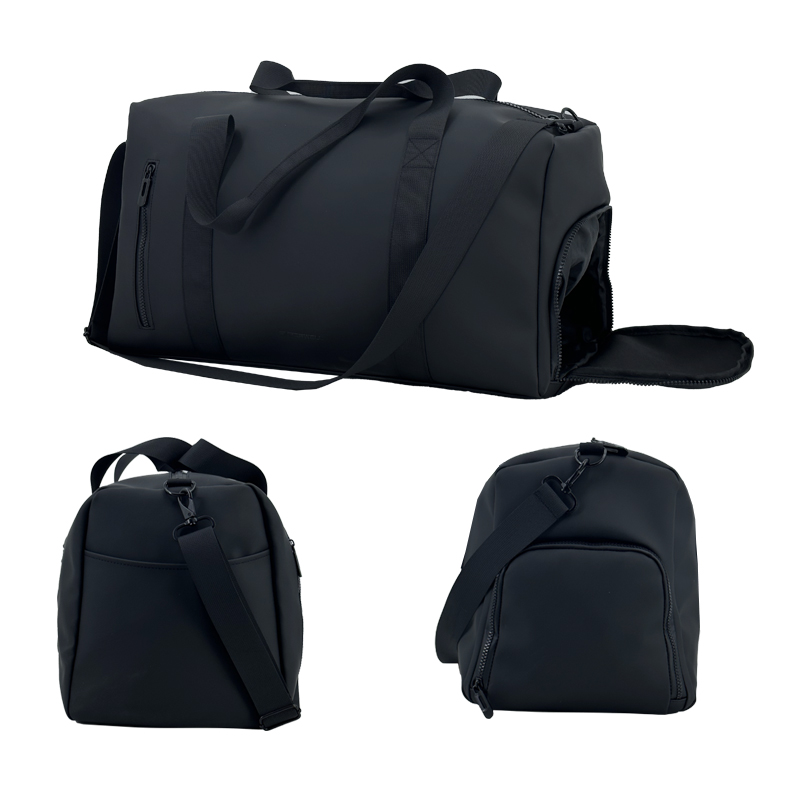
Standardized Testing Methods for Gym Duffle Bag Shoe Cavity Fabric
Conducting an air permeability test on textile materials is essential when designing high-performance athletic storage gear. A gym duffle bag with shoe compartment requires specialized engineering to isolate wet, sweaty footwear from clean apparel while preventing moisture and odor trapping. The shoe cavity fabric used in these designated pockets must balance moisture vapor transmission with structural durability. Industrial laboratories rely on established standards such as ASTM D737 or ISO 9237 to measure the rate of airflow passing perpendicularly through a specified area of the shoe cavity fabric under a predetermined air pressure differential.
Understanding bag ventilation testing parameters allows manufacturers to verify whether a selected mesh panel, honeycomb ventilation grommet, or breathable coated fabric meets functional requirements. When an air permeability test is performed incorrectly, or skipped entirely, bags often suffer from stagnant humidity, leading to bacterial growth and unpleasant odors inside the isolated compartment. At SUPERWELL , engineers implement strict laboratory protocols to evaluate every roll of shoe cavity fabric before bulk cutting begins, ensuring that every gym duffle bag with shoe compartment delivers optimal airflow management for athletes and fitness enthusiasts.
Equipment Calibration and Specimen Preparation for Air Permeability Testing
Executing an accurate air permeability test requires precise sample conditioning and calibrated digital testing equipment. Before any bag ventilation testing takes place, fabric swatches cut from the shoe cavity fabric must be conditioned in a standardized textile testing atmosphere, typically maintained at 20 degrees Celsius and 65 percent relative humidity for a minimum of 24 hours. This conditioning eliminates environmental moisture bias that could otherwise distort airflow measurements across dense woven polyesters or rubberized mesh panels.
During the testing procedure, the conditioned specimen of shoe cavity fabric is clamped securely over the test head orifice of the pneumatic air permeability tester. A vacuum pump draws air through the material, creating a standard pressure drop, which is commonly set to 100 Pascals for apparel and lightweight gear fabrics, or 200 Pascals for heavy-duty reinforcement textiles used in a gym duffle bag with shoe compartment. The digital sensor records the volumetric flow rate of air passing through the fabric in millimeters per second or cubic centimeters per square centimeter per second.
| Fabric Material Type | Typical Test Pressure Drop | Average Air Permeability Range | Primary Application in Duffle Bags |
| Polyester Sandwich Mesh | 100 Pa | 800 - 1200 mm/s | High-ventilation shoe pocket side panels |
| PU-Coated Oxford Weave | 100 Pa | 0 - 5 mm/s | Water-resistant internal dividing walls |
| Perforated Micro-Fiber | 100 Pa | 150 - 300 mm/s | Semi-breathable external shoe tunnel flaps |
| Heavy Nylon Ripstop | 200 Pa | 10 - 25 mm/s | Structural base reinforcement of shoe cavity |
Evaluating Ventilation Efficiency in Separate Shoe Compartments
Analyzing the results of an air permeability test provides critical insights into how effectively a gym duffle bag with shoe compartment will perform during daily gym use. A shoe cavity fabric with an excessively low airflow rating will trap humidity inside the compartment, creating a warm, damp environment ideal for mold and microbial proliferation. Conversely, a fabric with an excessively high air permeability rating may fail to contain dirt, sand, or fine debris from spilling into the main storage chamber of the duffle bag.
To optimize bag ventilation testing outcomes, product developers often combine different textile zones within the same compartment. For instance, a typical gym duffle bag with shoe compartment might feature a solid, water-repellent base fabric to prevent wet locker room floors from soaking through, combined with a high-permeability sandwich mesh gusset near the top zipper line. This dual-zone construction achieves balanced bag ventilation testing scores, ensuring continuous cross-ventilation while protecting nearby personal belongings.
Key factors monitored during ventilation evaluation include:
-
Pressure differential stability across multi-layer composite fabrics used in heavy-duty compartments.
-
Edge leakage prevention during the clamping phase of the digital testing apparatus.
-
Yarn distortion analysis after repeated mechanical stretching of elastic mesh shoe cavities.
-
Consistency of airflow readings across multiple specimen cuttings taken from different sections of the fabric roll.
Quality Control Standards and Lab Benchmarks at SUPERWELL Manufacturing
Maintaining rigorous quality assurance benchmarks is what separates premium athletic gear from generic mass-market products. At SUPERWELL, every production batch of a gym duffle bag with shoe compartment undergoes systematic audits to verify that the shoe cavity fabric meets specified air permeability thresholds. If a fabric shipment exhibits variance exceeding five percent from approved laboratory master samples, the entire lot is quarantined to prevent structural or functional failures in finished bulk orders.
Furthermore, bag ventilation testing is complemented by physical durability trials, including Martindale abrasion resistance and burst strength evaluations. A high-performance shoe cavity fabric must not only provide superior airflow during an air permeability test, but it must also withstand the heavy friction of running shoes, cleats, and heavy training footwear sliding in and out of the pocket hundreds of times. By combining advanced laboratory testing with expert factory craftsmanship, SUPERWELL ensures global brand partners receive durable, reliable, and well-ventilated athletic bags that stand the test of time.